
2.2 KiB
2.2 KiB
<status-indicator>
Colored circles that can pulse. That's it. That's the component.
Quick Start using a CDN
Copy the following to your HTML page:
<script type="module" src="https://esm.sh/@ayo-run/status-indicator"></script>

<status-indicator pulse status="positive">
  All systems operational
</status-indicator>
Installation via NPM
If you want to install the library as a node module, you can install the published package and the base class via NPM:
# using npm
npm install web-component-base @ayo-run/status-indicator

# or using pnpm
pnpm add web-component-base @ayo-run/status-indicator
Usage
Without a bundler that resolves node_module imports for you, you can use import
maps:
<html>
  <head>
    <script type="importmap">
      {
        "imports": {
          "web-component-base": "./node_modules/web-component-base/dist/index.js",
          "status-indicator": "./node_modules/@ayo-run/status-indicator/dist/status-indicator.js"
        }
      }
    </script>
    <script type="module">
      import StatusIndicator from "status-indicator";
    </script>
  </head>
  <body>
    <!-- you can use the status-indicator component now -->
  </body>
</html>
Attributes
1. status attribute
To indicate the status that determines the color of the circle, set the status attribute of the status-indicator component to any of the following values: positive, negative, active, or intermediary.
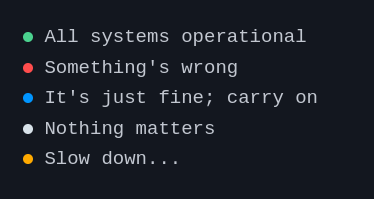
<status-indicator status="positive"> All systems operational </status-indicator>
<status-indicator status="negative"> Something's wrong </status-indicator>
<status-indicator status="active"> It's just fine; carry on </status-indicator>
<status-indicator status="intermediary"> Slow down... </status-indicator>
<status-indicator> Nothing matters </status-indicator>
2. pulse animation
You can add the pulse attribute to make the circle... pulse
<status-indicator pulse status="positive">
  All systems operational
</status-indicator>
Result
A project by Ayo